

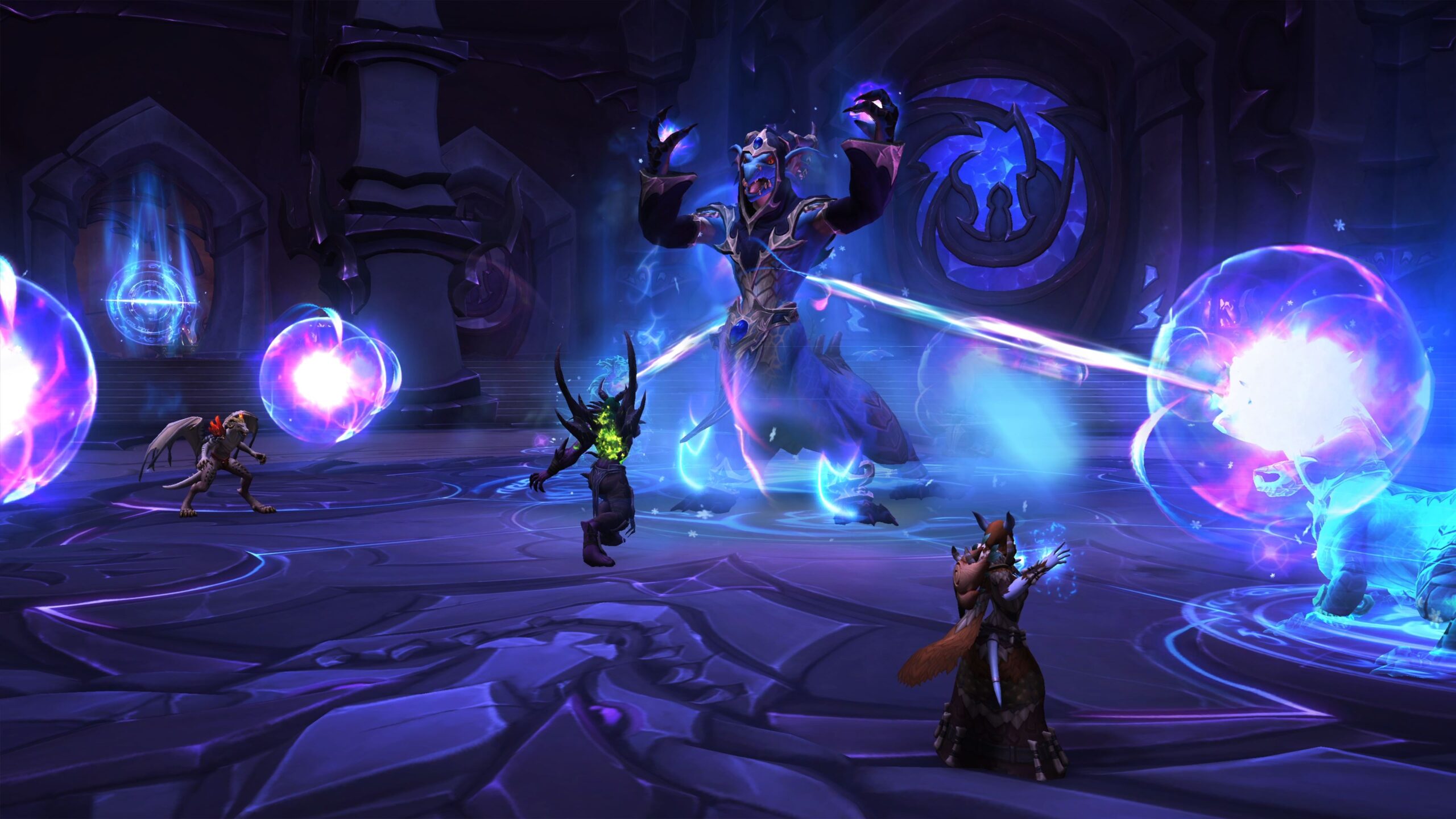
Introduction. For two decades, World of Warcraft has spun its lore between cosmic grandeur and human-scale heroism. The Old Gods whisper madness, the Titans impose order, and the mortals of Azeroth struggle to define their place between the two. Balancing these narrative forces has become one of Blizzard’s most intricate storytelling challenges. Too much cosmic scale risks alienation; too much mortal focus risks repetition. The result is a universe defined by tension—a constant dance between gods and heroes.
This article examines how Blizzard manages this delicate balance, weaving cosmic mythology and personal stories into a cohesive narrative that keeps players emotionally and intellectually invested in Warcraft’s ever-expanding world.

The Titans: Architects of Order
The Titans represent structure, creation, and destiny—the cosmic architects of Azeroth. Their lore is steeped in divine purpose, yet their actions often raise questions about control and autonomy. They crafted the world, imprisoned its chaos, and seeded it with life, but their vision of perfection comes at a cost. In expansions like Legion and Shadowlands, players saw the consequences of their rigid philosophies: the erosion of free will in the name of preservation.
Through the Titans, Blizzard explores the allure and danger of order. They are gods who see patterns where mortals see passion, whose strength lies in precision but whose weakness lies in detachment. This tension grounds their mythic power in moral ambiguity—reminding players that even creation has consequences.
The Old Gods: Chaos as Temptation and Truth
In contrast, the Old Gods embody entropy, corruption, and freedom unrestrained. Their influence seeps through whispers and dreams rather than decrees, turning madness into revelation. Encounters with them—from C’Thun’s eerie silence to N’Zoth’s psychological manipulations—transform cosmic horror into introspection. The Old Gods are terrifying not just because they destroy, but because they understand. They appeal to the chaos within players themselves—the desire to question, defy, and reject imposed order.

Blizzard uses them as mirrors for humanity’s own complexity. Each Old God encounter forces reflection: what if chaos isn’t evil, but simply another form of truth? In this way, the Old Gods elevate Warcraft’s lore from good-versus-evil simplicity into moral philosophy.
Mortals in the Middle: Humanity, Choice, and Defiance
Between these cosmic extremes stand mortals—fragile, flawed, but free. Characters like Anduin, Thrall, and Sylvanas embody the struggle for meaning in a world defined by powers beyond comprehension. Their victories are temporary, their choices imperfect, yet their humanity gives the story its emotional core. Through them, the game explores what it means to matter in a universe of gods.
Blizzard consistently anchors cosmic storylines through mortal perspectives. Instead of telling stories about omnipotence, it tells stories about endurance. The player character’s role as “champion” bridges this divide, serving as both witness and participant in the eternal conflict between order and chaos.
| Force | Representation | Philosophical Theme | Narrative Role |
|---|---|---|---|
| Titans | Order and creation | Control vs. autonomy | Architects and distant gods |
| Old Gods | Chaos and corruption | Freedom vs. madness | Tempters and destroyers |
| Mortals | Humanity and choice | Purpose vs. insignificance | Bridges between cosmic extremes |
The Narrative Balance: Scale vs. Emotion
Blizzard’s storytelling thrives on alternating between grand myth and personal drama. When the cosmic stakes grow too vast, the narrative refocuses on characters—their losses, hopes, and relationships. Legion’s war between Light and Fel found heart in Illidan’s redemption. Shadowlands’ metaphysical systems were grounded through Anduin’s vulnerability and Uther’s grief. This rhythm ensures emotional accessibility amid cosmic abstraction.

The balance also keeps the lore cyclical, preventing fatigue. Cosmic arcs elevate scale and mystery, while mortal arcs restore intimacy. Players feel both awe and connection, witnessing gods yet empathizing with those who defy them. The key lies not in choosing one perspective, but in harmonizing both.
Symbolism and Story Continuity
Each faction—the Titans, Old Gods, and mortals—represents a different lens through which Blizzard examines timeless questions: Is order virtuous or oppressive? Is chaos evil or liberating? Can humanity exist between them without being consumed by either? These recurring themes link expansions together, turning the Warcraft saga into a philosophical continuum rather than disconnected stories.

This interplay of cosmic and human storytelling ensures that every expansion feels like both evolution and reflection. As the universe expands, so too does its moral complexity. Players are not asked to choose sides—they’re asked to understand them.
Conclusion
Blizzard’s mastery of narrative balance lies in its refusal to let gods overshadow mortals—or mortals trivialize gods. By weaving the Titans’ order, the Old Gods’ chaos, and the heroes’ humanity into one continuum, WoW sustains both spectacle and soul. It’s this equilibrium that keeps players invested—not just in the next raid or cinematic, but in the question that has always defined Warcraft: what does it mean to have power, and what does it mean to be free?



Leave a Reply